2018

Shelf Life — The Bone Queen is Breezy, but a Gruesome Good Time

I know it’s gauche to start an essay with a definition, but bear with me for a second, I promise it’s relevant. 
 
Pulp fiction is technically defined by how it’s published, in magazines made with inexpensive wood pulp paper, priced cheaply to be sold and read in bulk. Sometimes this “quantity over quality” approach applied to the stories themselves, but sometimes it didn’t; pulp fiction, like all fiction, is only as good or as shoddy as the author writes it. 
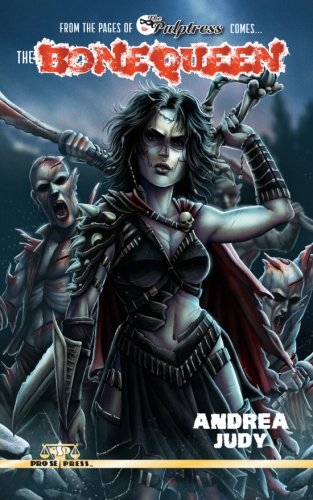
 
The Bone Queen by Andrea JudyBut beyond the technicalities of publishing, pulp fiction also developed a sort of overarching genre definition based on some recurring themes that tended to crop up in the stories again and again, regardless of categories like fantasy, noir, horror, etc. — namely, big, bombastic heroes squaring off against sinister, mysterious villains in dangerous, exotic locales, featuring beautiful women of both the damsel and the deadly variety.
 
All of this is to underscore that pulp fills a certain niche in fiction, and that The Bone Queen by Andrea Judy (disclaimer: another indie author friend of ours for several years now) falls squarely into this niche, so the answer to the question “But is it good, though?” will vary depending on where a reader stands in relation to said niche.
 
Do I like it? Yeah, I think it’s pretty good. The narrative isn’t deep or particularly nuanced; it doesn’t ask any tough questions or make many thoughtful moral arguments; and the fact that it’s an origin story for a character named “the Bone Queen” means you kind of know where the book is going to end up, more or less, from the word “go.” But it’s an entertaining trip getting there, straightforward and simple and fun, and full of rotten, visceral imagery, dark magic, and bone-crunching (in the most literal sense possible) action. 
 

Read down to the bone

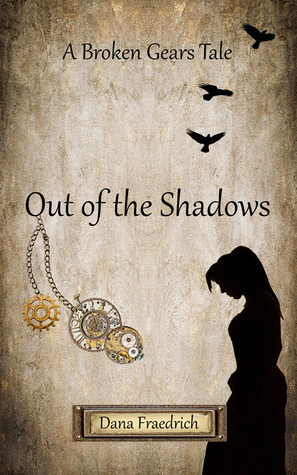
Shelf Life — Shining a Light on Out of the Shadows by Dana Fraedrich

Out of the Shadows by Dana Fraedrich really scratched the steampunk itch I’ve been having lately. I especially enjoyed that the book was set in a unique steampunk world, rather than Victorian England. In fact, the unique world that it is set in means that one could also classify it as magicpunk.

The book takes place in Springhaven, a London-esque city in the small country of Invarnis. While Springhaven appears idyllic and tranquil on the surface, in reality, it is a dystopian society run by Enforcers who take a zero-tolerance policy to what they deem criminal activity. Criminal activity includes your usual—theft, rape, murder—but also means any sort of resistance against the established order. This includes befriending or assisting anyone deemed a criminal.

The main character, Lenore Crowley, has been an orphan for around a year at the start of the book because her parents were taken away for defying those in charge. She believes them to be dead, but learns later on that their fate was much worse—they are in a prison where they are tortured daily for information and the sheer sadistic pleasure of the Enforcers.

What I found especially interesting about the world building in Out of the Shadows is that Lenore’s society is built upon the remains of the Old World. Nobody is entirely certain what the Old World was or what happened to it, but they do know that in the Old World, magic, supernatural creatures, and fantastical events occurred which no longer exist (or so everyone believes). As readers, we are not even entirely sure how long ago the Old World ended. Thousands of years, hundreds, or just decades? It is my guess that the end of the Old World may have been brought about by the same iron hand that now rules Lenore’s society.

Read further

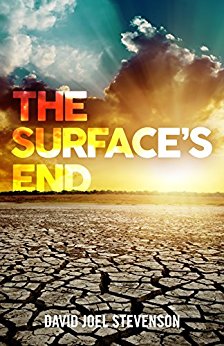
Shelf Life — The Surface’s End Has a Deep Environmental Message

The Surface’s End by David Joel Stevenson is a post-apocalyptic sci-fi that follows teenager Jonah Whitfield, a hunter living in a small town at the edge of the Deathlands. Even though his hometown is full of lush greenery, the Deathlands nearby are a desert wasteland stretching on for what seems like eternity, with an unnaturally sudden change between the two.

While out hunting one afternoon, Jonah’s prey darts into the Deathlands, and he follows, stumbling upon a hatch in the ground. He returns over the next week, drawn to the curious hatch, and finally manages to open it, revealing a tunnel down into the ground.

The beginning of the book starts out a bit slow. We get a lot of details about Jonah’s family, his town, and some hints as to what happened in the past that our modern way of life no longer exists. Despite being post-apocalyptic, Jonah’s life is actually pretty great. He has a loving family, the world has not descended into anarchy despite the lack of established government, nor is there a dystopian government ruling over everything with an iron fist (at least, not in his world).

I had a bit of a difficult time believing that society would have completely forgotten all about the world that came before the destruction that wiped out a good portion of humanity. Even if they no longer have working technology, they would still have books and left-over infrastructure, and I couldn’t imagine that people wouldn’t try to keep their knowledge of the past alive. However, we do only see a small portion of the world, Jonah’s hometown, which is pretty secluded, so it’s possible that this knowledge was kept alive in other locations.

The beginning is slow to give us a detailed sense of the “normal” world, at least from Jonah’s perspective. That way, we really feel how foreign the underground society he discovers is (though it may seem uncomfortably familiar in some ways). When Jonah descends into the hatch, he finds himself in a strange dystopian facility. At first he acts as an observer, hiding in small crevices and watching the family he comes across.

Read further beneath the surface

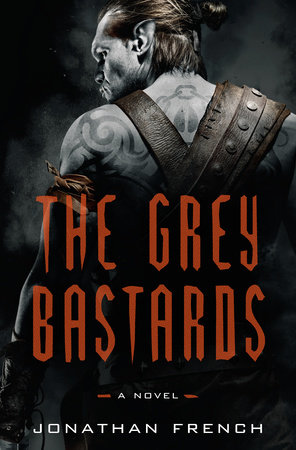
Shelf Life – The Grey Bastards Exemplifies Grimdark Fantasy at Its Damn Finest

Disclosure: I received a galley copy of The Grey Bastards from the publisher. Also, I’m friends with the author. He’s a cool dude and an excellent writer. Go read his shit.

Also, spoilers ahead.

The Grey Bastards is a fun, foul-mouthed read. If you’re turned off by bad language, steamy sex, or a good plot with plenty of action and twists, then this book isn’t for you. The Grey Bastards falls into the fantasy sub-genre known as grimdark. Where high fantasy has your Tolkien beautiful and noble elves, dwarves, humans, and wizards with epic battles between good and evil, grimdark takes all of that and covers it in shit, pus, and blood. Notice how in high fantasy nobody ever takes a piss or fucks? In grimdark, everyone does.

But don’t be fooled into thinking this book will be any less intelligent, epic, or heartfelt for it. The Grey Bastards is all of that and more. The novel follows Jackal, a half-breed orc living in the Lot Lands, the barren desert wasteland of Hispartha. He is a Grey Bastard, one of many half-orc hoofs, each protecting its own small town in the Lots. Members of a hoof are elite warriors that ride out on their Barbarians—giant warthogs—and slaughter invading bands of orcs.

Hispartha is a vibrant world, with a mix of fantastical species (orcs, half-orcs, elves, humans, halflings, and centaurs) with unique cultures and religions. Hispartha itself takes influences from Reconquista Spain, which is especially noticeable in the nomenclature, geography, and architecture.

Bastards, read on!

Shelf Life – The Grey Bastards Will Ride You Hard and Leave You Wanting More

Hot take: Orcs are bitchin’.

Big, tough, ripped, brutal badasses, for years they’ve been the go-to choice in fantasy for evil power players in need of intimidating mooks. More recently, modern fantasy has granted them a PR boost, both in reimaginings and in original stories. Black-and-white morality is out of fashion, shades of gray are in, and this gives orcs the opportunity to take the powerful, intimidating, dangerous image they’ve cultivated through decades of villain status and turn it toward nobler (or at least more sympathetic) pursuits.

No character is more interesting than the reformed villain. Put simply, orcs are the bad boys of the fantasy world.

The Grey Bastards by Jonathan FrenchAnd the warhog-riding half-orc bikers of The Grey Bastards are the bad boys (and girl) of the orc world.
Mix Sons of Anarchy with Shadow of Mordor and you’ll get a world similar to the Lot Lands of Jonathan French’s The Grey Bastards, where gangs of orc-human hybrids ride monstrous swine called barbarians as they patrol their anarchic wasteland, keeping the humans of Hispartha safe on one side by fending off the raiding parties of full-blooded orcs that routinely probe their lands from the other.

Although, confession, I don’t know how accurate this analogy still is when it comes to quality, because I’ve never actually seen Sons of Anarchy or played Shadow of Mordor. I’ve heard pretty good things about both, though, which makes me think the comparison still holds up. Because I have read The Grey Bastards, and yeah, it’s good. It’s really, really good.

Read in the saddle, continue on the hog!

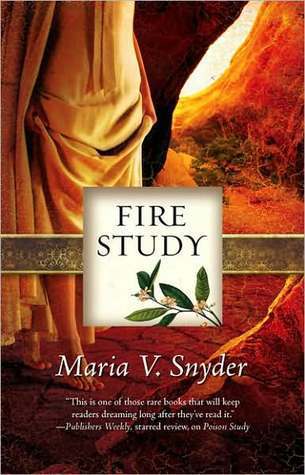
Shelf Life – The Chronicles of Ixia merits closer study

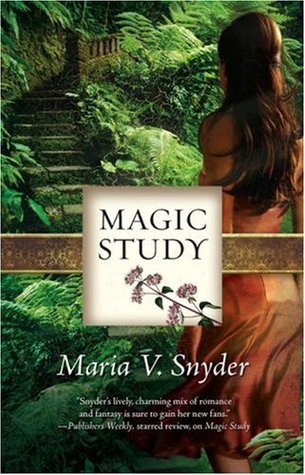
I love fantasy novels, but I have a hard time sticking with a series that has more than four books, especially if they follow a single main character. What can I say; I’m a trilogy kind of girl. However, Maria V. Snyder did an excellent job of keeping me hooked all the way through the end of her nine-book series, The Chronicles of Ixia (AKA Poison Study, AKA Soulfinder—publishers really need to learn to just find one series name and stick with it). It helps that the nine books are divided into three sub-trilogies.

The first trilogy, comprised of Poison Study, Fire Study, and Magic Study, follows Yelena Zaltana. The second series, also called the Glass series, follows her friend Opal Cowan in Storm Glass, Sea Glass, and Spy Glass. The final trilogy, Shadow Study, Night Study, and Dawn Study, is where things get a bit odd. Maria V. Snyder had thrown in a few short stories/novellas throughout from different characters’ points of view. Perhaps she got bored of just sticking to one POV, or maybe fans wanted more from the other characters, so the third trilogy is from Yelena’s POV in first person and the POV’s of multiple characters (mainly Valek, Leif, and Janco, with a few others popping in from time to time) in third person.

I’m not sure which editor thought it would be a good idea to have POV switch from first person to third person in the same novel, but—yikes—is it jarring. I don’t know if the editor thought readers would be too confused because the first two trilogies were first person, but I think the entire last trilogy should have been third person. Now, I will admit my bias here—I personally always prefer third person, and I especially love third-person limited that switches between multiple characters. I think the first two trilogies in the series would have been much stronger if they had been written as such.

But enough of my rant. Because even with the wonky POV stuff in the third trilogy, these books are amazing and absolutely worth your time to read. Snyder’s world-building is compelling, detailed, and original. The books take place mostly between two pre-industrial countries: Ixia and Sitia. Ixia is a post-revolution country ruled by Commander Ambrose. His personal body guard and assassin is Valek. In the first novel Yelena is in prison for murder and is offered the choice to be the Commander’s food taster in exchange for her life. She agrees, and throughout the first book she and Valek begin to fall in love.

Keep studying